Power
Proximity to substations and transmission, available withdrawal capacity, and reliable, redundant feeds — the #1 factor in site selection.

The hard part isn't the opportunity — it's knowing whether your land fits, and what to do about it.
Most tools hand you a score and stop there. We give you a score and a path. After a quick screen, qualifying landowners connect to a real development partner and an exchange where developers are actively looking — not just a listing.
Check my landPower comes first, then fiber, then the land itself. Here's the full picture we screen against.
Proximity to substations and transmission, available withdrawal capacity, and reliable, redundant feeds — the #1 factor in site selection.
Closeness to long-haul, metro, and dark fiber routes with multiple providers and low latency to population centers.
Ten acres at minimum, 40+ acres ideal, and 100–800 acres for hyperscale AI campuses.
Access for cooling systems, water rights, and an understanding of local drought risk.
Industrial or commercial zoning, special-exception requirements, and the local permitting climate.
Flood zones, seismic activity, wildfire and hurricane exposure, wetlands, and contamination.
Flat or gently sloped, buildable soils, and minimal grading to keep development costs in check.
Road access capable of carrying heavy equipment through the construction phase.
Local government posture, community-opposition risk, and available tax incentives.
Nearby solar, wind, or storage that supports a project's sustainability and power goals.
Answer two quick questions — the second checks how close your land sits to the power grid, live on the map below. Don't know your substation distance? We'll find it for you.
Answer a few questions about your parcel and get a preliminary read in minutes.
Our team runs a complete feasibility review of power, fiber, zoning, and more.
Qualifying land is routed to a development partner or the powered-land exchange.
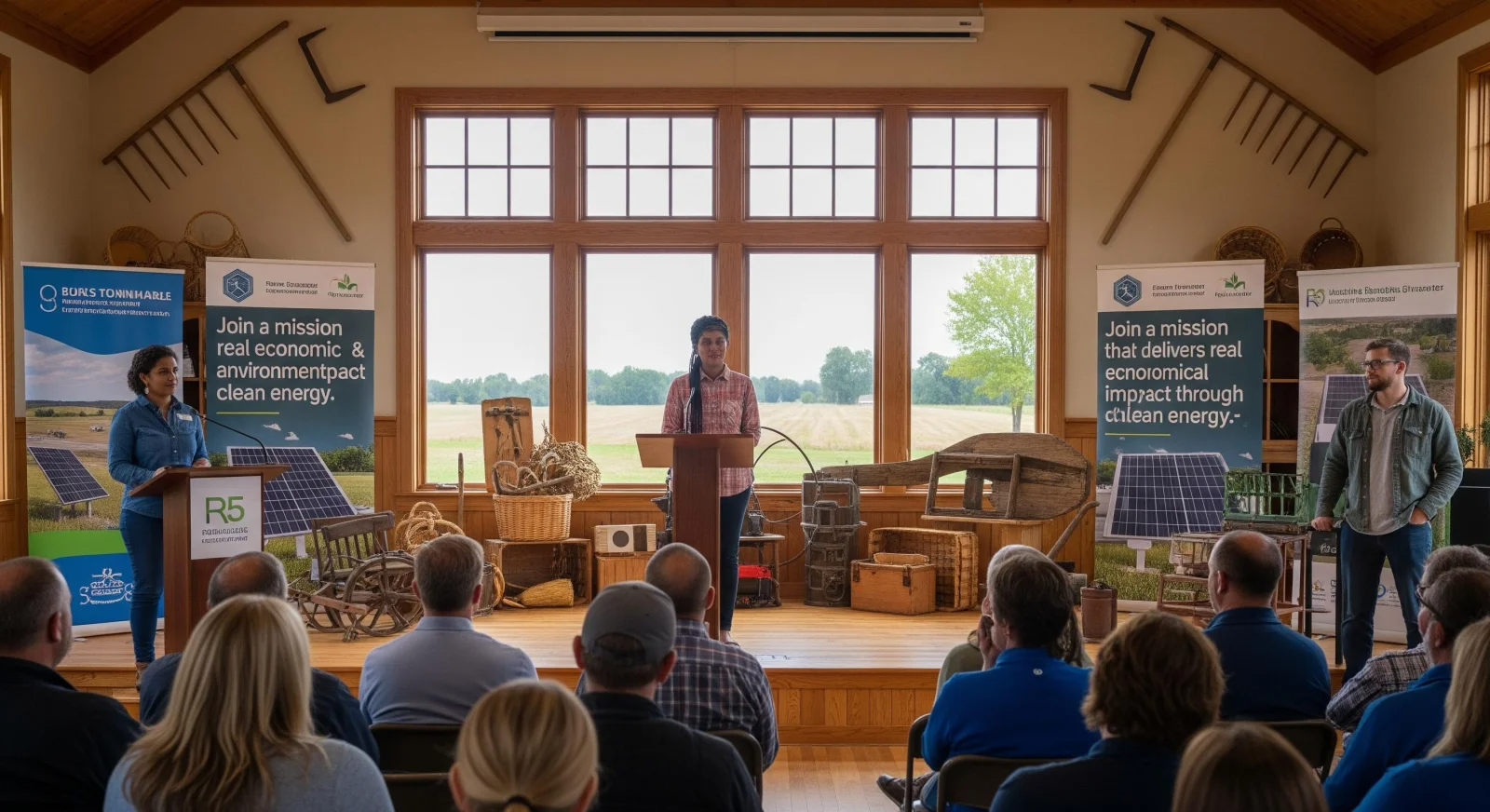
If data centers aren't the fit, we evaluate solar, storage, and farmland too.
Straight answers to what we hear most. These are general ranges — your parcel needs its own review.
It varies widely by market, power availability, and parcel size, so anyone quoting a single number is guessing. Ground leases for qualified, power-adjacent sites are generally long-term (often 20–50 years) with annual per-acre payments plus escalators — and the strongest sites, next to available substation capacity, command the most because power, not dirt, is the scarce input.
The honest version: the dollar figure follows the power. Land with a clear path to tens or hundreds of megawatts is worth far more than identical land without it.
A small or edge facility can work on roughly 10 acres. Most standard campuses want 40+ acres, and hyperscale AI campuses commonly assemble 100–800+ acres for buildings, substations, water and cooling, setbacks, and room to expand. Smaller parcels aren't disqualified — they can fit edge deployments or combine with neighboring land — but acreage is one of the first filters developers apply.
Power first, then fiber, then the land itself. The decisive factor is proximity to a substation or transmission line with real available capacity. After that: long-haul or metro fiber nearby, enough buildable acreage, water for cooling, industrial or commercial zoning (or a realistic path to it), flat and stable terrain, and low flood, seismic, and wildfire risk.
Both happen. Many landowners prefer a long-term ground lease, which keeps ownership in the family while generating predictable income for decades. Others sell outright. Which makes sense depends on your goals, tax situation, and the developer's requirements — some hyperscalers prefer to own. You're never obligated to either; the preliminary screen costs nothing.
Closer is better — "within a mile or two" of a substation or major transmission line with spare capacity is a strong signal. Distance can sometimes be overcome, but every mile of new transmission adds cost and years. Equally important is whether the local utility actually has capacity to deliver: a substation next door with no headroom is worth less than one a few miles off with megawatts to spare. We screen for both.
The preliminary screen takes minutes. A full feasibility review takes longer, and an actual development timeline — interconnection studies, permitting, construction — typically runs several years from agreement to operation, with interconnection queues usually the longest pole. If you want income sooner, we'll tell you whether solar, storage, or another use offers a faster path for your parcel.
Tell us about your property and we'll tell you, plainly, what's possible. No obligation — just a conversation about your land.